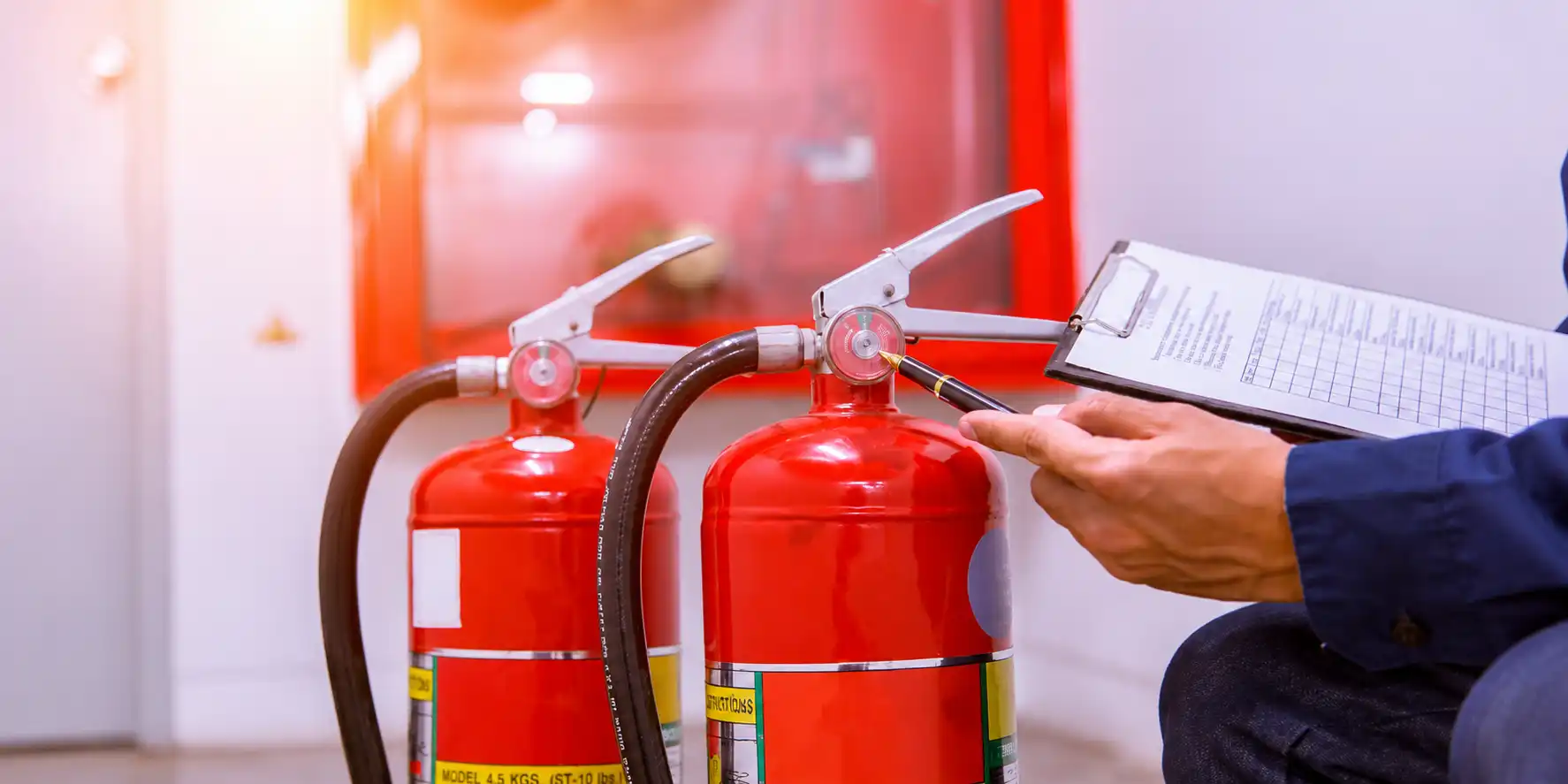
A fire safety audit in Western Australia is a legal obligation under the Building Act 2011 and the Fire and Emergency Services Act 1998. Fail one, and you are looking at prohibition notices, fines, and in serious cases, forced closure until every deficiency is resolved. The legal exposure sits with the person conducting the business or undertaking, not the building owner, and not whoever last serviced the equipment.
What most operators miss is the gap between having fire protection equipment on site and having a site that will actually clear an audit. Sprinklers can be tagged, extinguishers can be mounted, exit signs can be lit, and a premises can still fail on documentation gaps, egress obstructions, or a fire door that does not latch. Auditors assess the system, not individual components.
The businesses that pass on the first attempt share one common trait: they treat the fire safety audit process as a structured preparation exercise, not a reactive scramble.
What Auditors Checks During Fire Safety Compliance Audit?
DFES and licensed fire protection company auditors work through a site against specific Australian Standards: AS 1670 for detection and alarm systems, AS 1851 for suppression and servicing, AS 2293 for emergency lighting, and the National Construction Code for egress. These are not general impressions of tidiness. Each system gets assessed against a measurable standard, and each deficiency is documented individually.
The six primary areas every fire safety audit covers are consistent across Perth commercial premises, from small retail tenancies through to large strata complexes.
Fire Safety Audit: Primary Assessment Areas
| System | What Gets Checked | Governing Standard |
|---|---|---|
| Fire detection and alarms | Smoke/heat detectors, panels, notification devices, test records | AS 1670 / AS 1851 |
| Sprinkler systems | Sprinkler heads, water supply, maintenance tags and service records | AS 2118 / AS1851 |
| Fire extinguishers and hose reels | Correct type per zone, accessibility, service tags within 6-month window | AS 2444 / AS 1851 |
| Emergency and exit lighting | Illuminated signs, battery backup duration, test records | AS 2293 |
| Egress and evacuation routes | Clear paths, self-closing fire doors, NCC travel distances to exits | NCC / BCA |
| Fire safety documentation | Maintenance logs, test records, evacuation plans, Fire Safety Statement | Multiple |
Note: Auditors request documentation alongside the physical inspection. Missing records can fail a site that is otherwise physically compliant.
Working with an experienced fire protection company in Perth before your audit date gives you the clearest picture of where your site actually stands against those standards, rather than where you assume it stands.
The Fire Safety Audit Process: Triggers and Timing
Perth businesses encounter a fire safety audit under five conditions: a scheduled annual inspection, a change of occupancy or building use, a complaint or incident report, renewal of an occupancy permit, or a voluntary internal review.
The mandatory frequency is annual for most commercial and high-occupancy buildings in Western Australia. High-risk premises face more frequent inspections, and the threshold for what qualifies as high-risk is not always obvious. Any operational or structural change to your premises can alter the applicable standard, which is why understanding the current
Any operational or structural change to your premises can alter the applicable standard, which is why understanding the current fire safety regulations in Perth relevant to your building class matters before the auditor arrives, not after.
Even outside mandatory schedules, conducting a voluntary internal review every six months is a defensible practice. Operations shift, layouts change, and staff turnover. A fire safety audit process that runs independently of those changes creates the gaps auditors flag.
Fire Safety Audit Checklist: Eight Steps That Separate a Pass from a Re-Inspection
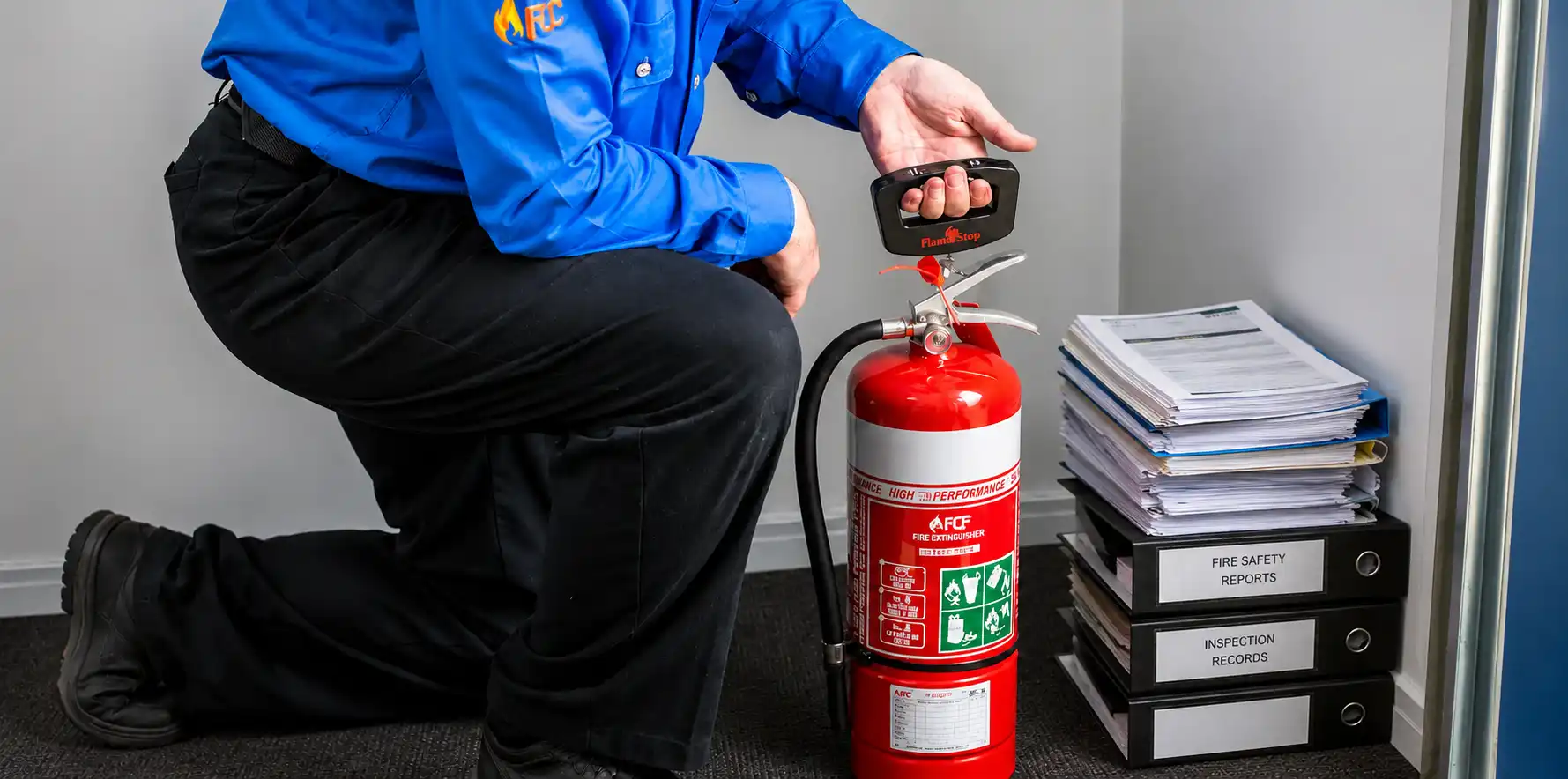
This fire safety audit checklist is built around the specific failure modes auditors encounter most frequently across Perth commercial premises. Each step targets a documented category of non-conformance.
1. Map Your Applicable Standards to Your Building Class
The NCC assigns buildings to classes based on use and occupancy. The standards that apply to a Class 5 office differ from those of a Class 6 retail tenancy and from a Class 9 health facility. Before anything else, confirm which Australian Standards govern your specific building class and which provisions apply to your current use. Mismatched assumptions here produce mismatched preparation.
2. Walk the Entire Facility With Fresh Eyes
Assign someone who does not normally walk the floor to conduct an internal walkthrough. Familiarity produces blind spots. Look for blocked exit paths, missing or expired extinguisher tags, fire doors propped open or failing to latch, damaged seals around penetrations, and exit signs that are dim or obscured. Document every finding in writing, with location references.
3. Service and Test All Fire Protection Equipment
Engage a qualified technician to service your fire alarms, sprinklers, extinguishers, and emergency lighting before the audit date. Tags must be current: extinguishers on the six-monthly AS 1851 schedule, alarms tested per AS 1670, and emergency lights confirmed against AS 2293 battery backup requirements. A green gauge and an unbroken seal are not evidence of compliance. A current service tag from a licensed technician is.
For a detailed breakdown of what each inspection level involves, see the guide on fire safety requirements in Perth.
4. Clear Every Exit Path and Equipment Access Point
Stock, furniture, bins, and racking placed in front of extinguishers or blocking exit corridors produce immediate non-conformances. Under AS 2444, an obstructed extinguisher is treated as absent. Auditors do not give partial credit for a unit that is technically present but inaccessible. The same logic applies to fire hose reels, exit doors, and stairwells.
5. Verify Fire Door Performance
Fire doors are one of the most common failure points on Perth audits. Each door must self-latch fully without manual assistance, close from any open position, and never be propped manually. Check hinges, closers, and latch mechanisms across every fire door in the building. A door held open with a wedge or a chair does not satisfy the standard regardless of its condition when closed.
6. Update and Test Your Evacuation Plan
Your evacuation plan must reflect the current floor layout, include current assembly point details, and be displayed prominently throughout the premises. If the layout has changed since the last review, the plan is already out of date. Auditors also ask whether staff know how to execute the plan, not just where it is posted.
Structured fire safety training in Perth gives staff practical competency in extinguisher operation and evacuation procedures, and it demonstrates a documented compliance culture to the auditor.
7. Compile the Complete Documentation Package
Assemble service logs, inspection reports, maintenance records, test certificates, evacuation plans, and any previous audit reports before the inspection date. Missing documentation is not treated as a minor oversight. Auditors request these records as primary evidence of ongoing compliance, and gaps in the paper trail produce findings even where the physical equipment is compliant.
For premises that require a Fire Safety Statement, the guide to fire safety statement costs in Perth covers what that document requires and what it typically costs to prepare.
8. Close Every Outstanding Item From Previous Audits
Unresolved findings from prior inspections are a direct red flag. Auditors reference previous reports and expect documented evidence that each non-conformance has been rectified. Verbal confirmation does not satisfy this. A written rectification record, dated and linked to the original finding, does.
Address outstanding items first, before any other preparation step. An open finding from a prior audit that reappears on a current inspection signals to the auditor that compliance is not actively managed.
Why Perth Businesses Fail: The Most Frequent Non-Conformances

Audit failures cluster around a predictable set of deficiencies. Understanding the pattern tells you where to direct preparation effort.
- Overdue or missing service tags on extinguishers and sprinkler heads are the most common single finding across Perth commercial properties.
- Fire doors that fail to latch fully or are routinely held open, particularly in high-traffic hospitality and retail environments.
- Exit signs that are dim, damaged, or not illuminated, often because battery backup systems have degraded between inspection cycles.
- Blocked evacuation routes, especially in warehouses and storage-intensive tenancies where operational pressures work against compliance.
- Absent or outdated fire safety documentation, including evacuation plans that predate a building renovation or occupancy change.
- No documented record of fire drills or staff training, which is a distinct finding separate from equipment compliance.
Each of these categories is preventable with systematic preparation. They appear on audit reports because they are rarely visible in day-to-day operations, not because they are technically complex to resolve.
What Happens If You Are Not Fire Safety Compliant on Audit Day
A prohibition notice issued on audit day means the premises cannot operate until the specified deficiencies are rectified and a follow-up inspection confirms compliance. The direct cost is the rectification work and the re-inspection fee. The indirect cost is the operational disruption, potential revenue loss, and the reputational impact of a forced closure.
Insurance exposure runs alongside the regulatory risk. Commercial property insurers verify compliance before settling fire claims. An out-of-date service tag, a missing maintenance record, or the wrong extinguisher type in a kitchen zone gives the insurer grounds to dispute the claim entirely. The compliance document trail is not administrative overhead. It is the evidence that keeps an insurance policy valid.
Preparing for Your Next Audit
The fire safety audit process rewards exactly one approach: systematic preparation that starts before the audit date, not after it is scheduled. The businesses that pass consistently are not better resourced. They run compliant sites as an operational baseline rather than a periodic exercise.
FCF Fire and Electrical Perth has been protecting Perth businesses for over 10 years, with qualified technicians servicing commercial premises across the full metro area, from small retail tenancies to large strata complexes. Same-day service is available. Every pre-audit engagement covers equipment servicing, tag currency, documentation review, and a written assessment of any deficiencies that need rectifying before the inspector arrives. The compliance position is clear before anyone else comes to check.
To book a pre-audit inspection or discuss your current compliance position, call 08 6327 9697 or visit fireservicesperth.com.au.
Frequently Asked Questions (FAQs)
Is a fire safety audit a legal requirement in Western Australia?
Yes. A fire safety audit may be required under Western Australian legislation, including the Building Act 2011 and fire safety regulations that apply to commercial and high-occupancy buildings. Compliance obligations vary based on building classification, occupancy, and operational risk. Failing to meet requirements can result in fines, prohibition notices, or business disruption.
How often should a commercial building have a fire safety audit?
Most commercial buildings in Perth should undergo a fire safety audit annually, although higher-risk premises may require more frequent inspections. Changes to occupancy, renovations, or operational activities can also trigger additional reviews. Regular audits help identify compliance gaps before they become enforcement issues.
What is the difference between a fire safety audit and AS 1851 maintenance?
AS 1851 maintenance focuses on the scheduled servicing and testing of fire protection equipment such as extinguishers, alarms, and sprinkler systems. A fire safety audit takes a broader approach by assessing the entire site, including evacuation routes, fire doors, emergency lighting, and compliance documentation. A building can have serviced equipment and still fail an audit if other compliance issues exist.
Who can carry out a fire safety audit in Perth?
A fire safety audit in Perth should be conducted by qualified and experienced fire protection professionals familiar with Australian Standards and local compliance requirements. Many businesses work with licensed fire protection companies and CPPFES-qualified technicians to assess risks and prepare sites before formal inspections. Professional audits provide a clearer picture of compliance and help reduce the risk of failed inspections.