That assumption is where compliance gaps form and where WorkSafe WA auditors, Fire Authority Auditors and loss adjusters find the evidence they need.
Why Is a Fire Extinguisher Inspection a Legal Obligation?
Every commercial property in WA operates under three simultaneous layers of obligation: the WHS Act 2020 (WA), AS 1851-2012, and the Building Code of Australia or now National Construction Code, depending on the year your building was built. The WHS Act places a primary duty of care on every PCBU, every business owner, strata corporation and property manager, to keep fire equipment safe and in working order.
AS 1851-2012 sets the technical standard for what ‘working order’ actually requires. The BCA cross-references AS 1851 as a building code obligation for Class 2-9 commercial premises.
WorkSafe WA does not wait for a fire to enforce these obligations. Inspectors conduct unannounced audits, issue Improvement Notices and Prohibition Notices, and can halt operations until deficiencies are corrected. The WHS Act 2020 restructures penalties into four categories.
Under Section 272A of the Act, WHS penalties cannot be insured against. Every dollar of a fine comes directly out of the business. The fire extinguisher inspection service visit your technician completes twice a year is what keeps you out of that penalty structure.
What AS 1851-2012 Section 10 Actually Requires from Your Service Provider?
AS 1851-2012 defines a ‘Competent Person’ as the only individual authorized to conduct a compliant fire extinguisher inspection.
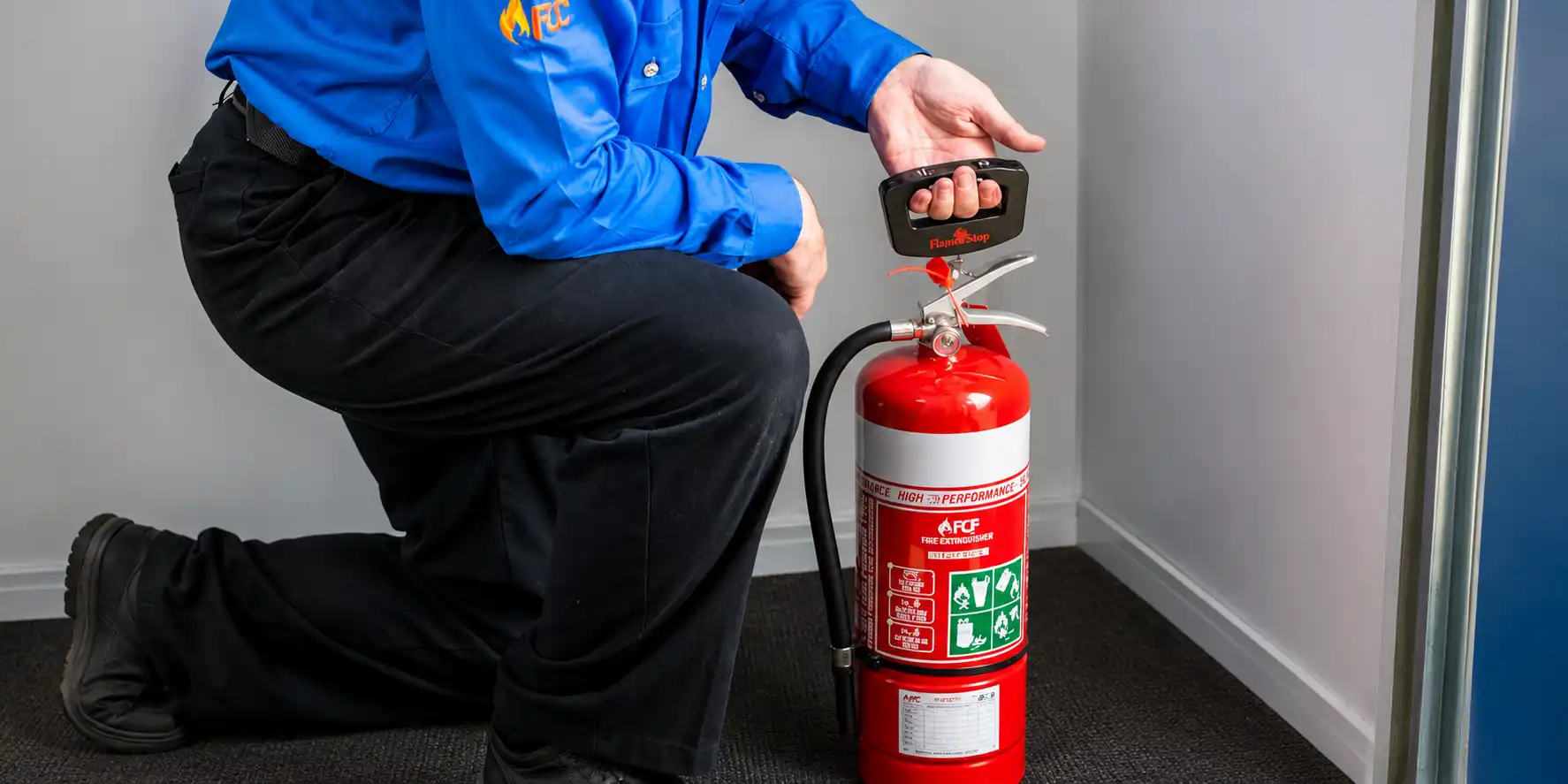
The standard requires the service tag attached to every unit to display the inspection date. Records must be retained for a minimum of seven years. FCF Fire and Electrical records have Date of Manufacture, Manufacturer, Technician License Number, Extinguisher Rating, Location and Bar coding.
An extinguisher with a self-applied or non-licensed tag does not satisfy AS 1851. It fails an audit and gives a commercial insurer ground to dispute a fire claim. Staff visual checks, however diligent, cannot produce a compliant tag.
That distinction matters every time an auditor walks through your site. For a full breakdown of what each service level covers, see the
For a full breakdown of frequency requirements, see our fire extinguisher service schedule guide.
What Does a Licensed Technician Do in a Fire Extinguisher Inspection?
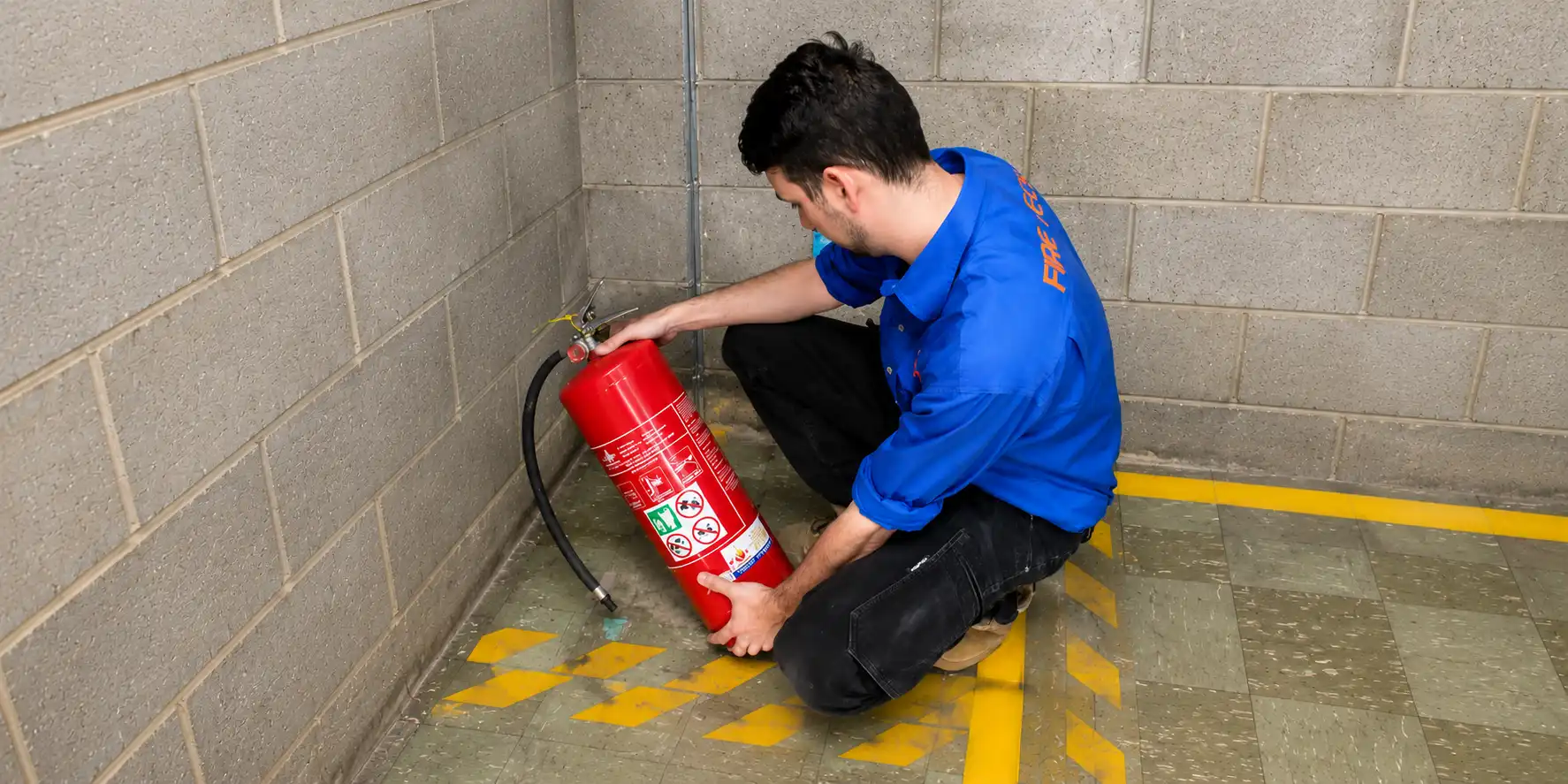
A qualified technician follows a structured sequence on every commercial site visit under AS 1851 from the pre-visit asset check through to the written defect report. Here is exactly what that process looks like in practice.
Pre-visit site review and asset check
Before a technician sets foot on your premises, the site record is reviewed. Unit count, extinguisher types, and zone allocations are confirmed against your asset register. Any changes since the last fire extinguisher inspection, such as new EV charging bays, modified kitchen layouts, and expanded storage areas, are flagged before the physical check begins.
This step prevents missed units and ensures the fire extinguisher inspection service covers every compliance obligation under AS 2444.
Location, height, and accessibility verification
Every extinguisher must be mounted with the handle at 1.2 meters above floor level, unobstructed and immediately visible. A unit blocked by stock, racking, or furniture is treated as absent under AS 2444, which means it fails the fire extinguisher check regardless of its physical condition.
Technicians also confirm that each unit is paired with a compliant color-coded identification sign at the correct height and position.
Physical condition and corrosion assessment
The cylinder body, seams, and valve components are examined for dents, surface damage, and corrosion. On Perth coastal sites, this part of the fire extinguisher inspection goes further; technicians specifically look for salt-induced pitting along seam lines and around valve bodies, where accelerated oxidation occurs that a standard visual check will not detect. Any unit showing structural compromise is tagged out of service on the spot and documented in writing.
Pressure reading, weight check, and agent condition
Stored-pressure units must show a gauge needle in the green operating zone. Anything outside that range triggers an immediate out-of-service tag. CO2 and Water Extinguishers units carry no gauge; they are weighed against the manufacturer’s specified charge weight, with any loss exceeding 10% requiring a recharge. Dry powder units are inverted and shaken to confirm the agent flows freely. Humidity-induced caking — a documented risk in Perth’s coastal environment produces a compacted mass that will not discharge under pressure, even when the gauge reads compliant.
Safety pin, tamper seal, and discharge mechanism inspection
The safety pin is checked for correct seating and ease of removal. The tamper seal must be fully intact. In Perth coastal environments, salt infiltrates the junction between the pin and valve body, seizing the mechanism until the unit cannot be discharged at all, yet the gauge still reads green and the seal remains unbroken. Hoses are checked for perishing and blockages. Outdoor nozzles receive specific attention: mud-dauber wasp nests inside discharge heads are a documented finding unique to WA properties and invisible from outside the unit.
Service tag application and compliance documentation
Once all checks are completed, the technician applies a new tag showing the inspection date, next due date, service level performed, and their license number. This tag is the primary compliance document under AS 1851. Without it, the unit does not meet the standard regardless of its physical condition which means it will fail an audit and may void a fire-related insurance claim. Service records are retained by the fire extinguisher inspection service provider and must be available for a minimum of seven years.
Written defect reporting and logbook entry
Any unit that cannot be made compliant on-site is tagged out of service, removed from use, and replaced or repaired before the next scheduled fire extinguisher check. A written defect notification is issued to the building owner. The site logbook receives a corresponding entry. Both documents form part of the compliance record that WorkSafe WA investigators, DFES fire investigation teams, and insurance loss adjusters will request following any fire-related incident on your premises.
What Happens If an Extinguisher Fails and Why Records Matter?
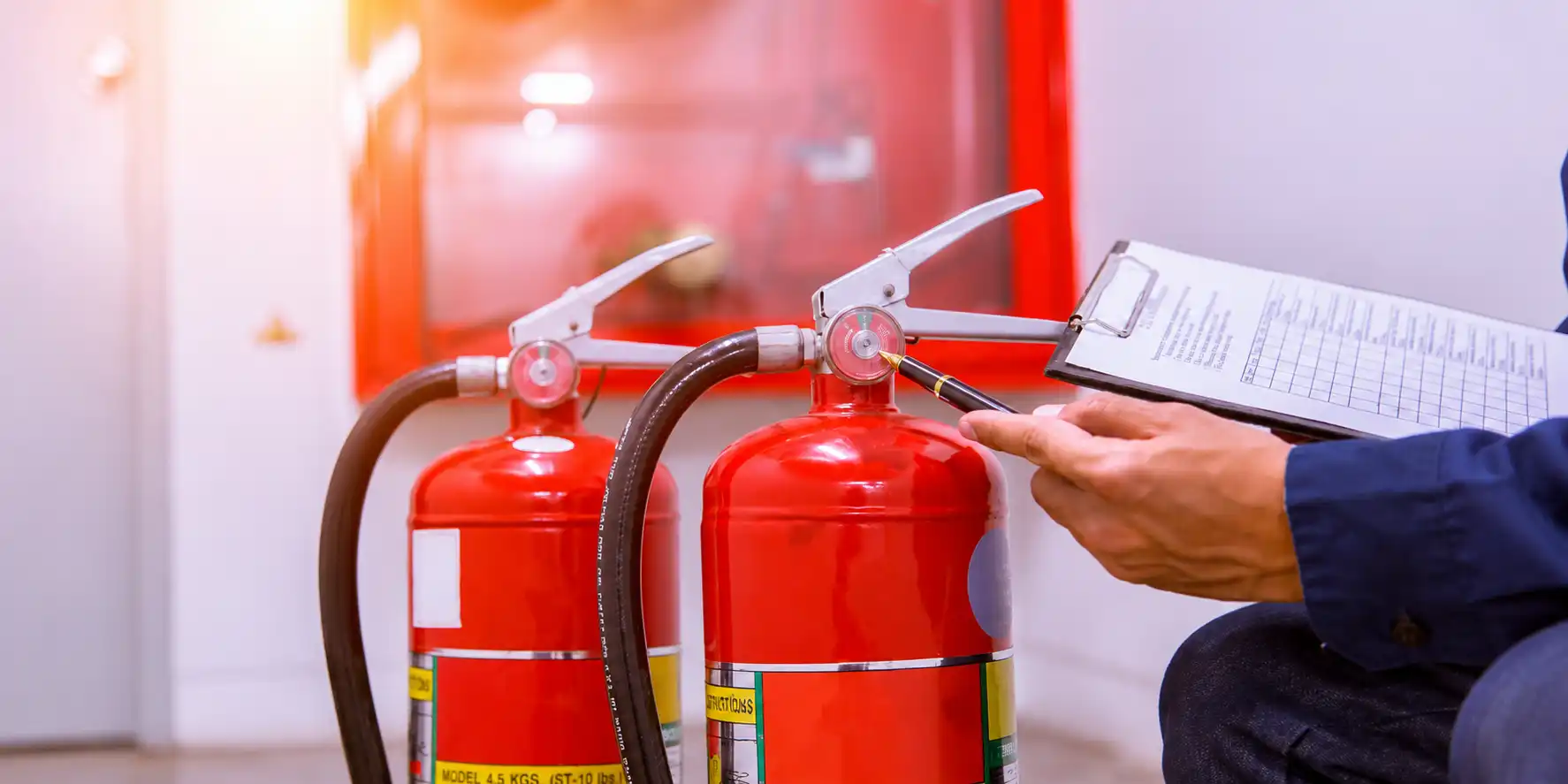
When a defect is identified during a fire extinguisher inspection, the unit is immediately tagged out of service and the building owner receives notification. It does not re-enter service until a licensed technician clears and retags it. That process generates a paper trail — and that paper trail is what your insurer demands after an incident.
Commercial property insurers investigate compliance before settling fire claims. Loss adjusters request:
- Current service tag showing inspection date, next due date, and technician license number
- Site logbook (when applicable under AS1851) entry corresponding to each fire extinguisher inspection service visit
- Written defect reports for any unit tagged out of service
- Technician invoices confirming attending company and license details
Seven-year record retention under AS 1851-2012 is not a suggestion. It is the documentation window that covers the realistic gap between a compliance failure and a formal investigation.
A monthly fire extinguisher check by staff supplements the AS 1851 cycle — it does not replace any part of it. A diligent walkthrough confirms clear access, a green gauge, an intact pin, correct weight including ABE units and seal, and a current service tag within the six-month window. Any issue found means calling a licensed technician, not a self-repair.
Businesses wanting staff prepared for these checks should consider a fire extinguisher inspection course or fire extinguisher inspection training program.
Book a Professional Fire Extinguisher Inspection Service Now
Knowing what a technician checks during a fire extinguisher inspection is the only way to verify that your compliance obligation has actually been met. The service tag is evidence, not assurance. The nine-step process behind it is what makes the tag defensible when WorkSafe WA or a loss adjuster asks to see it.
FCF Fire and Electrical Perth have been protecting Perth businesses for over 10 years, covering residential strata through to large commercial portfolios across the full Perth metro area. Every fire extinguisher inspection service includes written defect reporting, centralized compliance registers for strata clients, and bundled contracts covering extinguishers, hose reels, and emergency lighting as standard.
To schedule a fire extinguisher inspection service or ask about fire extinguisher inspection training for your team, call 08 6327 9697 or visit fireservicesperth.com.au.
Frequently Asked Questions
How long does a fire extinguisher inspection take?
A Level 1 six-monthly check takes 5–15 minutes per unit. A five-yearly overhaul runs significantly longer: the unit is emptied, dismantled, pressure-tested at 1.5 times its working pressure, refilled, re-sealed, and restamped. For a Perth office with 10 extinguishers, a six-monthly service visit typically requires 1–2 hours on site, including travel and documentation.
Can a fire extinguisher be too old to service?
Most extinguishers carry a 10–12-year operational lifespan, provided mandatory hydrostatic testing and recharging have been completed on schedule. Units showing structural damage dents, cracks, or severe corrosion get replaced regardless of age. For older units, the cost of a five-yearly overhaul often approaches the cost of replacement. A licensed technician assesses this at every service visit.
Do I need a professional to service my fire extinguisher?
Yes. The mandatory six-monthly compliance inspection under AS 1851 requires a qualified technician. Only a licensed technician can issue a compliant service tag, the primary document WorkSafe WA inspectors and insurers request. Monthly staff visual checks are a useful supplementary habit but do not satisfy any AS 1851 service interval. Structured fire extinguisher inspection training equips your team to conduct those supplementary checks effectively between professional visits.
For fire extinguisher online training visit our very competitive and informative First Response Fire Extinguisher Training Courses for all Australian Businesses –https://firetrainingonline.fcfnational.com.au/