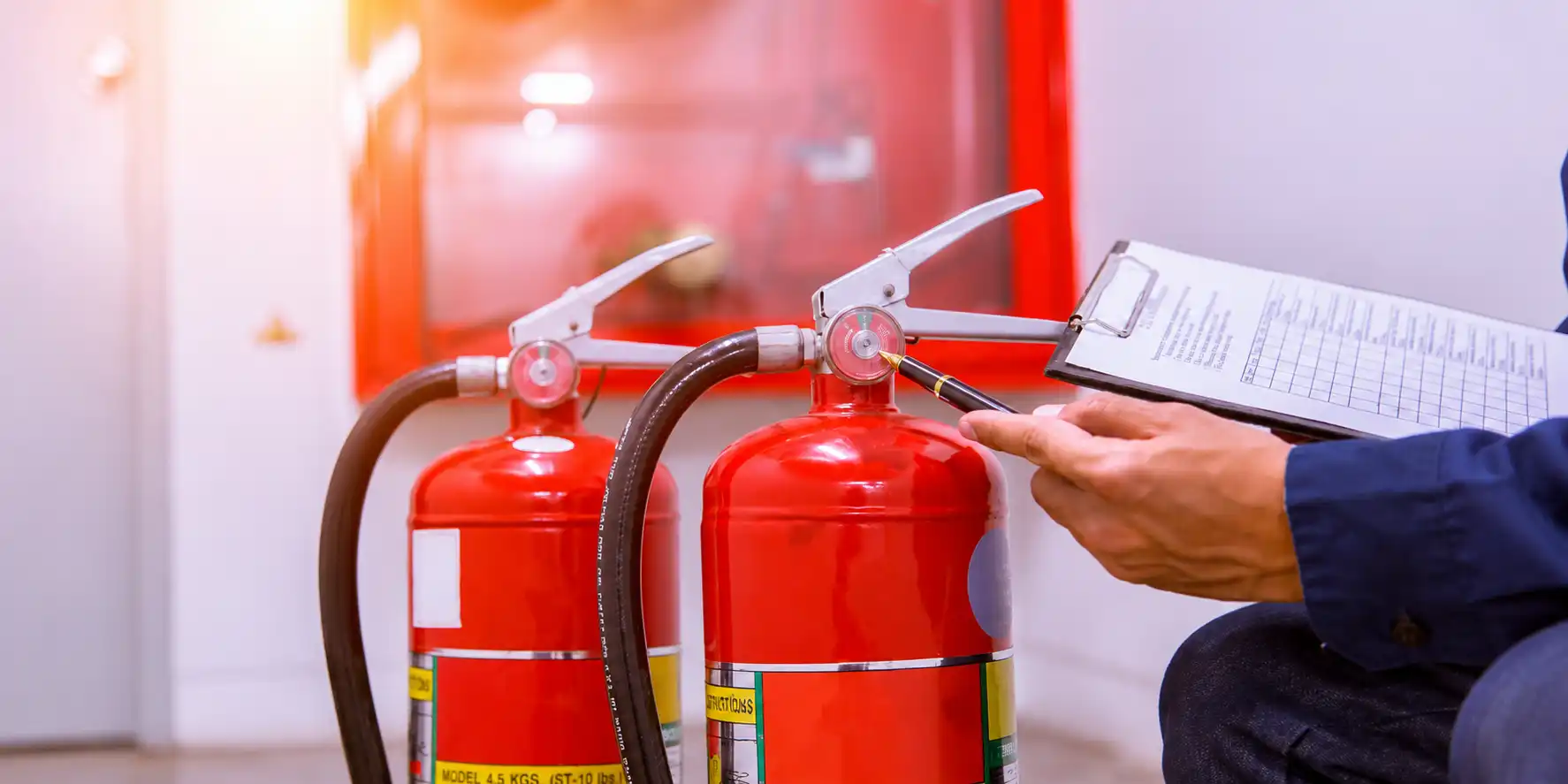
If you run a business in Perth, fire extinguisher servicing is not optional. It is a legal requirement and failing to comply doesn’t just invite a fine. Under Western Australia’s Work Health and Safety Act 2020, the consequences can include six-figure penalties, voided insurance policies and in the most serious cases, criminal charges.
Yet every year, Perth business owners and strata managers are caught out not because they didn’t care about safety, but because they didn’t know exactly what the law demands. Learning the complexity of a properties fire extinguisher requirements tell you precisely what your obligations are, what happens if you miss them and why professional fire extinguisher servicing is the only way to protect your business, your people and your assets.
The Legal Requirement Every Perth Business Owner Must Understand
Fire extinguisher compliance in Perth sits at the intersection of three separate layers of law and you need to satisfy all three simultaneously.
The foundation is the Work Health and Safety Act 2020 (WA), which came into force on 31 March 2022. Under this Act, every Person Conducting a Business or Undertaking (PCBU) that’s every employer, business owner, strata corporation and property manager has a primary duty of care. That duty includes keeping all workplace equipment, including fire extinguishers, safe and in proper working order.
Sitting above that duty is Australian Standard AS 1851:2012 Routine Service of Fire Protection Systems and Equipment. This is the technical backbone of fire safety law in Australia. It prescribes how often fire extinguishers must be serviced, what each service must include and how records must be kept. WorkSafe WA inspectors and fire investigators reference this standard directly when assessing whether a business has met its obligations.
Finally, the National Construction Code (NCC) and Building Code of Australia (BCA) require that fire protection systems installed in Class 2–9 commercial buildings must be maintained to the standard under which they were installed. For the vast majority of Perth commercial premises, that means ongoing compliance with AS 1851 is a building code obligation not a guideline.
What Fire Extinguisher Testing and Servicing is Actually Required
Under AS 1851, a fire extinguisher on your Perth premises must be serviced on three mandatory schedules:
| AS 1851 Mandatory Fire Extinguisher Servicing Schedule | |
|---|---|
| Six-Monthly | Physical condition check, pressure gauge reading, weight verification, safety seal integrity, accessibility confirmation. Service tag stamped and updated on the physical unit. |
| Annual (Level 2) | All six-monthly checks, plus detailed inspection of hose, nozzle, discharge mechanism, and support bracket. Identifies internal wear not visible during the six-monthly check. |
| Five-Yearly (Level 5) | Full overhaul: extinguisher discharged, cylinder hydrostatically pressure-tested, internal components replaced, recharged with fresh extinguishing agent.
For extinguishers over 5 years old, replacement may be the more economical option, depending on condition and servicing requirements. Verification with a qualified fire technician is recommended. |
One of the most common misunderstandings among Perth business owners is the difference between monthly visual checks and formal six-monthly servicing. Occupants and building managers can perform monthly visual checks, but these do not constitute AS 1851 compliance.The six-monthly, annual, and five-yearly services must be carried out by a qualified fire technician. Only a competent, licensed professional can issue the compliance tag and service documentation that will withstand a WorkSafe WA audit.
A proper fire extinguisher service Perth record is critical for compliance and liability protection. Here’s what it must include:
- Metal service tag: Stamped with the service level and date, attached directly to the extinguisher.
- Logbook entry: A corresponding record in the on-premises fire safety logbook.
- Both components required: Either the tag or the logbook entry missing constitutes non-compliance.
- Compliance verification: Tags and logbook entries must be present during WorkSafe inspections, post-fire investigations, or insurance assessments.
- Documented liability: An extinguisher with an outdated or missing tag is considered a liability, not an asset.
Maintaining both the metal tag and logbook entry ensures your business meets all regulatory requirements. Both must exist at the time of a WorkSafe inspection, a post-fire investigation, or an insurance assessment, as the absence of either immediately creates a compliance failure.
What are the Penalties for Non-Compliance with Fire Safety Law?
Perth business owners need to understand exactly how serious the WHS Act 2020 (WA) makes non-compliance. The Act restructured penalties into categories based on severity and the numbers are not small:
| WHS Act 2020 (WA) — Maximum Penalty Scale | |
|---|---|
| Industrial Manslaughter | Body corporate: $10,000,000 fine. Individual: 20 years imprisonment and/or $5,000,000 fine. |
| Category 1 — Reckless conduct | Body corporate: up to $3,000,000. Individual: up to $600,000 and/or 5 years imprisonment. |
| Category 2 — Failure causing harm | Body corporate: up to $1,500,000. Individual: up to $300,000. |
| Category 3 — General non-compliance | Body corporate: up to $500,000. Individual: up to $100,000. |
There is one additional detail that changes everything: under Section 272A of the WHS Act 2020, insurance coverage for WHS penalties is now unlawful. You cannot insure against WHS fines. You cannot have your company indemnify you for a penalty. Every dollar comes directly out of the business.
Beyond fines, WorkSafe WA can issue Improvement Notices or Prohibition Notices that halt business operations entirely until fire safety deficiencies are rectified. The indirect losses from a business shutdown, lost revenue, broken client contracts, and staff disruption frequently exceed the fine itself.
How Non-Compliant Extinguishers Put Your Business Insurance at Risk
Perth business owners routinely assume their fire insurance covers them regardless of equipment maintenance status. However, that assumption has ended more businesses than fires themselves.
Insurers are entitled to investigate how a fire started, how it spread and whether fire suppression equipment was properly maintained. If an investigation finds that your extinguishers were overdue for servicing, or that service records cannot be produced, the insurer has grounds to deny your claim outright. That includes building damage, contents and business interruption cover.
For strata properties in Perth, the stakes are even higher. A voided claim over common-property extinguishers can leave the entire owners corporation and every lot owner within it personally exposed to the full cost of fire damages that should have been covered by insurance.
Fire safety compliance documentation, service tags on your extinguishers and the logbook on your premises stand between a valid insurance claim and an unrecovered loss.
Why You Shouldn’t Skip Professional Fire Extinguisher Servicing
It’s important to understand why DIY checks cannot satisfy formal fire extinguisher requirements under AS 1851. Monthly visual checks by employees are permitted and encouraged, but they only meet the minimal monitoring requirement.
Six-monthly and annual fire extinguisher servicing must be carried out by a licensed professional holding the relevant CPPFES (Certificate III/IV in Fire Protection) qualification or equivalent competency. Only their signed service record and tagged extinguisher ensure proper fire extinguisher compliance.
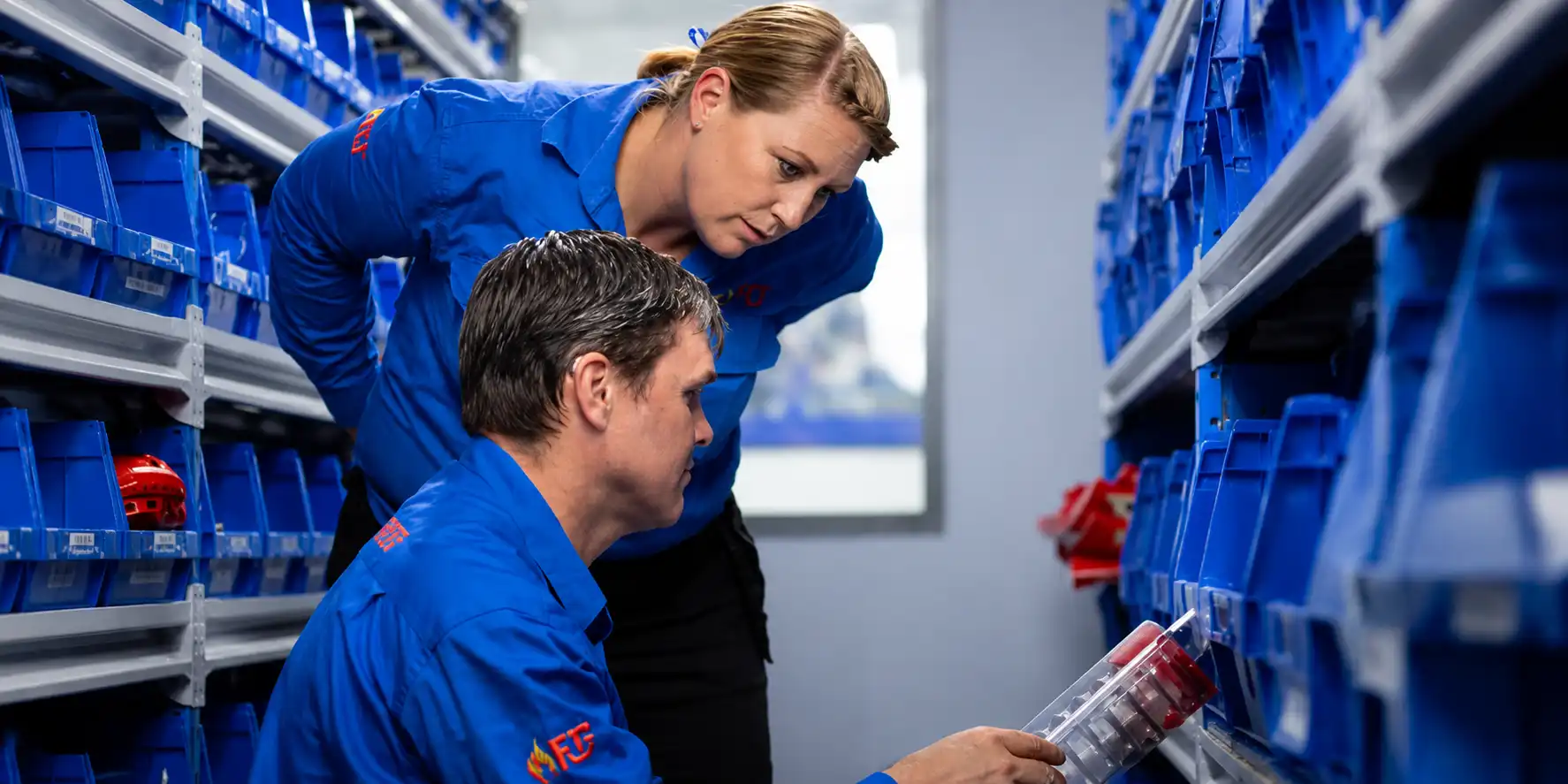
There are practical reasons beyond regulatory box-ticking. Qualified technicians from Perth’s fire safety companies like FCF Fire & Electrical Perth who perform professional fire extinguisher testing can detect internal corrosion that is invisible to the naked eye, identify powder caking that may prevent discharge, verify pressure beyond simple gauge readings and confirm that the extinguisher type suits the current hazard profile.
For example, if you have a commercial kitchen that uses deep fryers, you need wet chemical units, as a standard dry powder extinguisher in that setting could trigger a catastrophic grease fire.
Reliable fire extinguisher service Perth protects your business, ensure compliance with fire safety law and help you avoid costly incidents like this.
How Much Does Fire Extinguisher Service Cost in Perth?
Professional fire extinguisher services in Perth typically run approximately $20 to $300. However, costs for fire extinguisher servicing may still vary depending on the type, number, and location of units, so contacting a professional fire technician or licensed service provider can ensure accurate pricing and advice.
FCF Fire & Electrical in Perth offers competitive, transparent pricing for fire extinguisher services across the Perth metro area. Our licensed technicians service, test, and tag all extinguisher types to AS 1851 standards, provide full documentation, and issue compliance certificates that ensure your business stays fully protected and avoids unexpected penalties or insurance disputes. Our services extend nationally, including fire extinguisher services on the Sunshine Coast and beyond.
Don’t Wait for a WorkSafe Notice: Ensure Compliance Today
Fire extinguisher compliance in Perth is not complicated but it is mandatory and the consequences of skipping it have never been more serious under the WHS Act 2020 (WA).
The fire extinguisher requirement is clear: six-monthly professional servicing, annual inspections and five-yearly overhauls, all conducted by a qualified technician, all documented on-site. Meeting this requirement protects your staff, satisfies WorkSafe WA, validates your insurance, and carries a cost that any business can absorb.
FCF Fire & Electrical Perth has been protecting Perth businesses for more than 18 years, with specialist teams also serving businesses through FCF Fire Services Sydney and FCF Fire Services Adelaide.
Ready to Get Compliant? Book a professional fire extinguisher service in Perth now. Call FCF Fire & Electrical Perth on 08-6327-9697 or submit an enquiry at fireservicesperth.com.au and get the compliance documentation your business legally needs.
Frequently Asked Questions (FAQs)
What type of fire extinguisher do I need for my business?
The right type depends on the hazards present in your space, not what was installed at fit-out. Dry powder suits general commercial areas. CO2 is standard for server rooms and electrical equipment. Wet chemical is mandatory for commercial kitchens using deep fryers.
Fire extinguisher compliance under AS 1851 includes confirming the unit type still matches your current risk profile at every service. A licensed fire extinguisher services technician makes that assessment as part of every scheduled visit.
How long does a fire extinguisher last?
Most portable fire extinguishers have a service life of 10 years from the manufacture date. Before that threshold, the five-yearly fire extinguisher testing overhaul mandated under AS 1851 determines whether a unit can be recharged or must be replaced.
A cylinder that passes hydrostatic pressure testing continues in service. One that fails is replaced on the spot. Waiting until an extinguisher looks worn before acting is a risk under fire safety law. The manufacture date on the label tells you exactly where you stand.
What is difference between service and fire extinguisher inspection?
An inspection is the six-monthly check: pressure gauge, seals, weight, condition, and tag update. A fire extinguisher service goes deeper, covering the hose, nozzle, discharge mechanism, and internal components a visual check cannot reach. Under AS 1851, both are mandatory at separate intervals and both require a licensed technician. Professional fire extinguisher servicing covers all scheduled levels, including the five-yearly overhaul. Treating an inspection as a service creates a direct gap in your AS 1851 compliance record.
How often do fire extinguishers need to be serviced?
Under AS 1851, all portable fire extinguishers in Western Australia require a six-monthly inspection, an annual service, and a full pressure test and overhaul every five years. Each service must be carried out by a qualified fire technician and documented with a stamped service tag on the extinguisher and a corresponding logbook entry on-site. Monthly visual checks by building staff satisfy only the monitoring requirement and do not substitute for any of the scheduled service intervals.